Rug Period
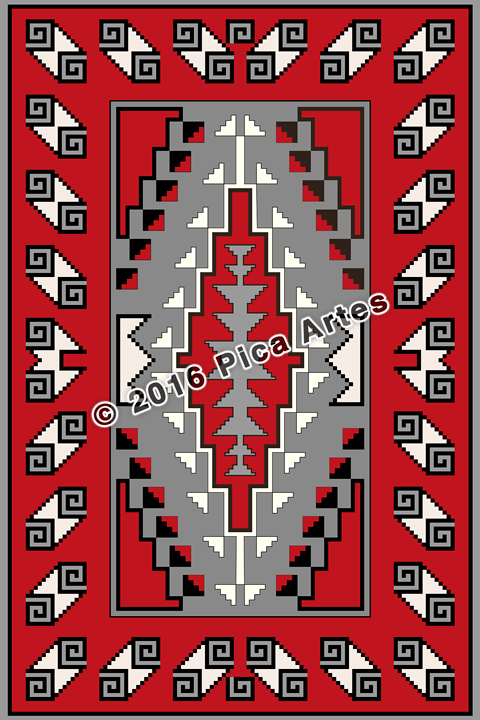
Ganado Rug
Ganado rugs were first woven by the Dine' during the Rug Period from approximately 1900 through 1930. Ganado rugs have a red colored background with a foreground comprised of black, white and gray. This design typically consists of one or more stepped, diamond-shaped center medallions which are embellished with multiple geometric patterns. The four courners of the Ganado rugs often contain crosses, zigzags or geometric shapes and the rug typcally has a dark border.
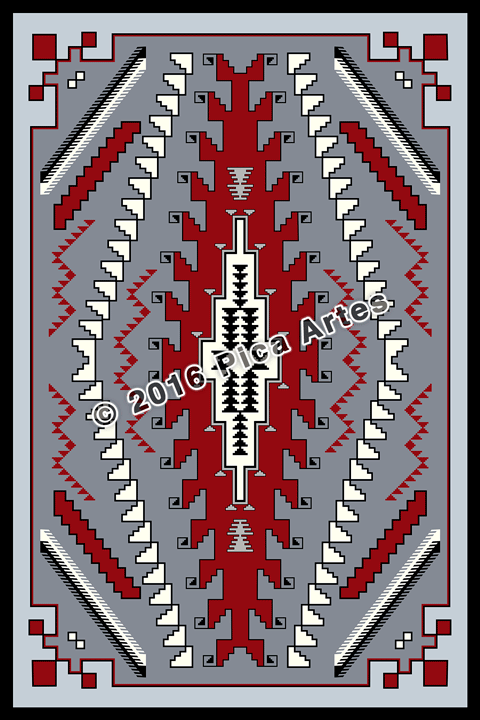
Klagetoh Rug
Klagatoh rugs were first woven by the Dine' during the Rug Period from approximately 1900 through 1930. The design of Klagetoh rugs closely resembles that of Ganado rugs, however, the colors are reversed. Klagetoh rugs have a gray colored background with a foreground comprised of black, white and red. The design typically cconsists of one or two centrally placed, elongated diamond shapes.
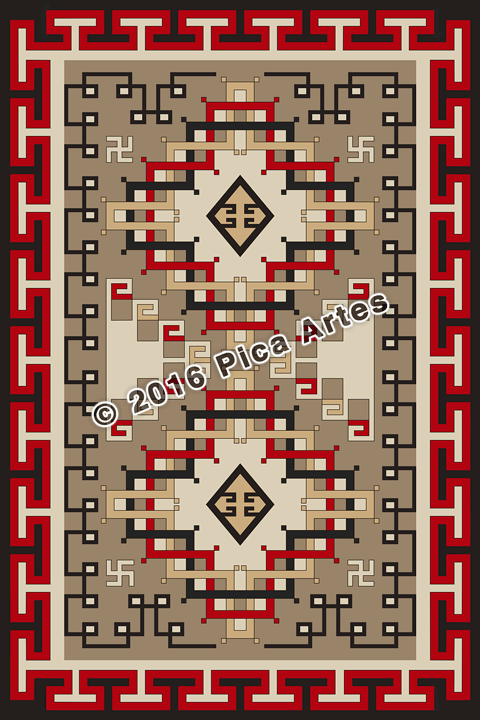
Crystal Rug
Crystal rugs were first woven by the Dine' during the Rug Period from approximately 1900 through 1930. Crystal rugs typically contain three bands of color lying between two or three more complex bands containing squash blossums, arrows, stars, diamonds or other shapes. The color palette found in Crystal rugs tends to feature earth tones although pastel colors may also be used.
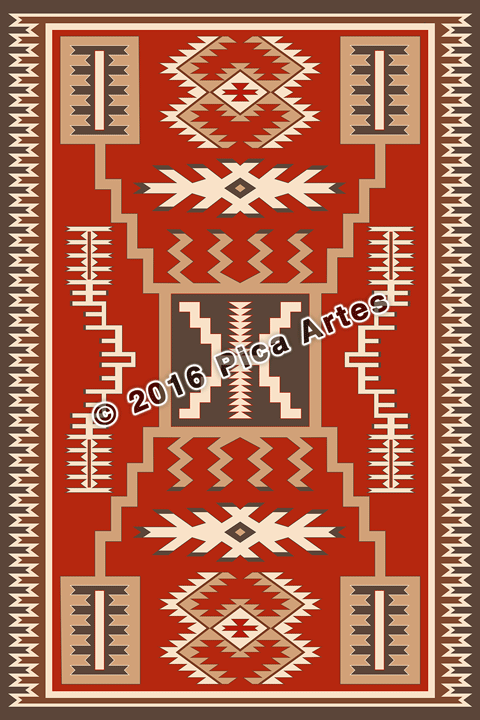
Storm Rug
Storm rugs were first woven by the Dine' during the Rug Period from approximately 1900 through 1930. The Storm rug is distinguished by its design rather than its color scheme. The design is generally described as having a central rectangle with zigzag lines connecting to smaller corner rectangles. Some claim that this design has symbolic meaning (the zigzags representing lightning and the corner rectangles representing the four sacred mountains or the directions of the four winds). Storm rugs may have a dark border that is embellished wih geometric patterns. The space beween the main design and the border usually contains stylized elements such as clouds or water beetles.
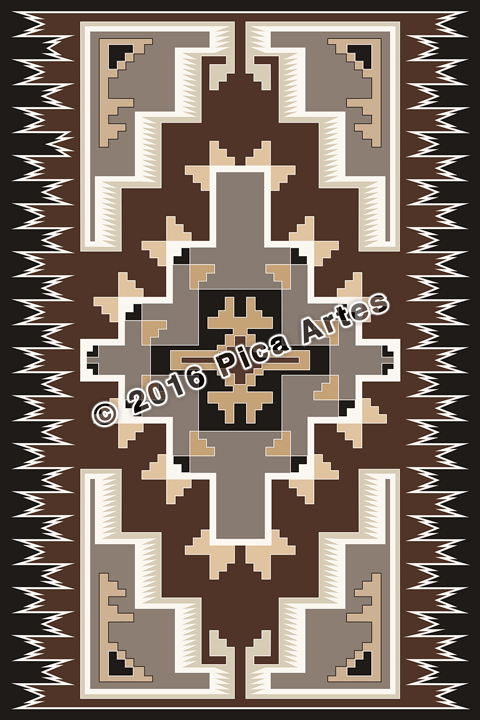
Two Grey Hills Rug
Two Grey Hills rugs were first woven by the Dine' during the Rug Period from approximately 1900 through 1930. True Two Grey Hills rugs are woven of natural, undyed and handspun wool in white, black and brown tones. The design of this rug consists of complex geometric patterns, usually based on a large central diamond shape surrounded by one or more geometric borders and a plain, dark outer border.
